Why Maine Winters Are So Hard on Your Driveway — and What to Do About It
New Driveway vs. Repaving Before You Spend a Dollar, Make Sure You're Solving the Right Problem.
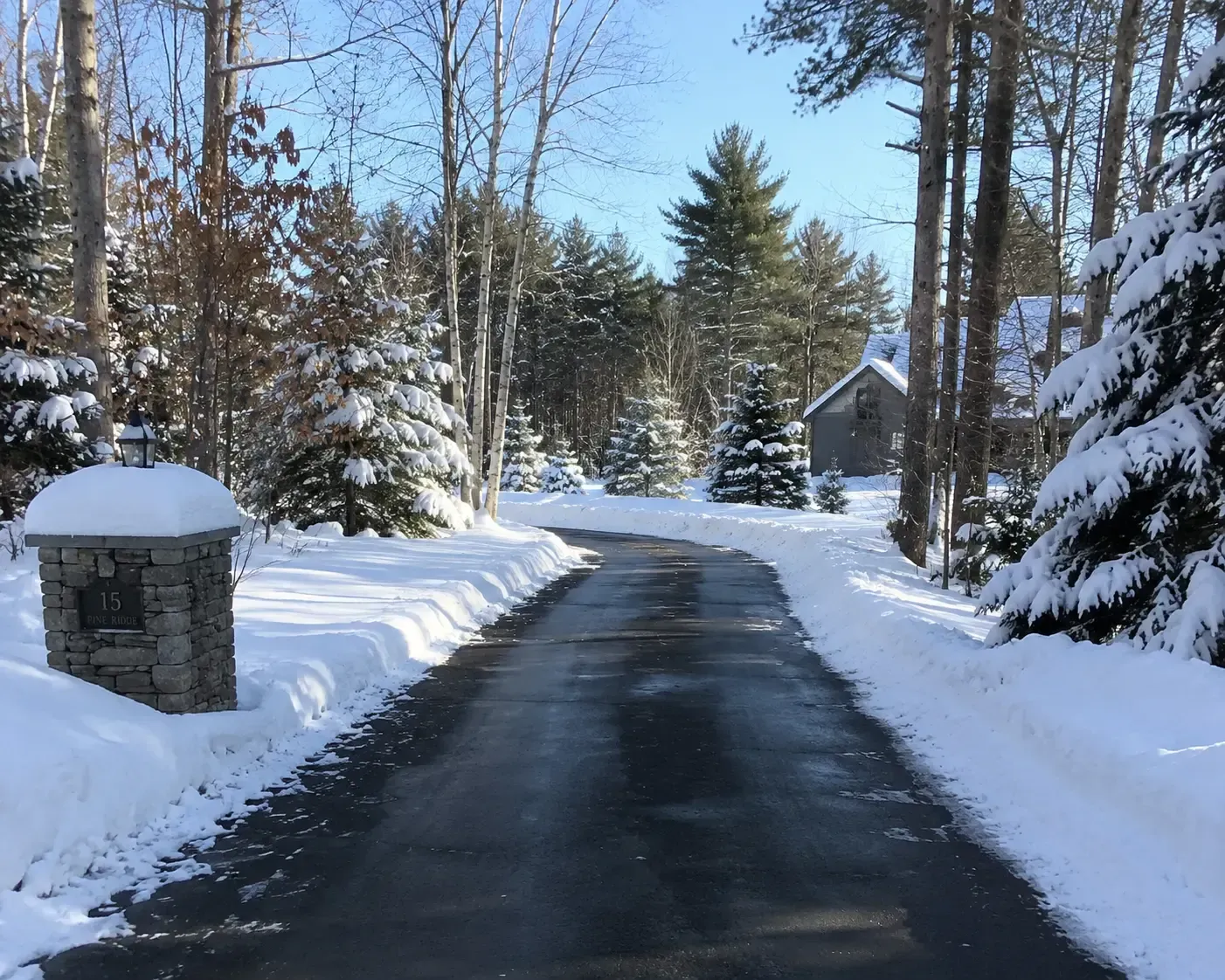
If you've lived in Maine for more than a few years, you already know the drill. Fall arrives, the temperatures start swinging, and by spring your driveway has a few new cracks, a rough patch near the end of the apron, or a pothole that wasn't there last October.
It's not bad luck. It's physics — and Maine's climate puts asphalt through a punishing cycle that few other states can match. Understanding why it happens is the first step to stopping it.
The Freeze-Thaw Cycle: Maine's Biggest Threat to Asphalt
The damage doesn't happen all at once. It builds gradually, season after season, through a process called the freeze-thaw cycle.
Here's how it works.
Asphalt is a flexible material, but over time it develops small surface cracks — from UV exposure, traffic, and normal aging. When rain or snowmelt soaks into those cracks, and the temperature drops below freezing, that water expands by about 9 percent as it turns to ice. That expansion puts pressure on the surrounding asphalt, slightly widening the crack.
Then it thaws. The ice contracts, leaving a slightly larger void. More water seeps in. It freezes again. The crack widens further.
Maine can see dozens of freeze-thaw cycles in a single winter — sometimes multiple cycles in a single week during the shoulder seasons. Each one does a little more damage. What starts as a hairline crack becomes a wide crack. A wide crack becomes a pothole. A pothole, left untreated, becomes a structural failure that reaches down into the base.
This is why driveways in Maine age faster than driveways in warmer states. It's not a question of material quality — it's the relentless repetition of freeze and thaw, winter after winter.
Road Salt and Sand: Necessary but Damaging
Most Maine homeowners use road salt or calcium chloride to keep their driveways safe in winter. It works — but it comes at a cost.
De-icing chemicals accelerate the breakdown of asphalt's surface binder, the material that holds everything together and gives the pavement its flexibility. Over time, repeated salt exposure causes the surface to become brittle, dry, and prone to cracking and crumbling.
Sand is gentler on the surface but can accumulate in drainage areas and cause problems if not cleaned up in the spring.
Neither option is avoidable for most Maine homeowners. The key is offsetting the damage with proper maintenance — particularly sealcoating.
How Sealcoating Protects Your Driveway
Sealcoating is the most effective and affordable weapon against winter damage. Applied every three to five years, a quality sealcoat does several things at once.
It seals micro-cracks before water can penetrate them, cutting off the freeze-thaw cycle before it starts. It restores the protective binder in the asphalt surface, keeping the pavement flexible rather than brittle. It creates a barrier against road salt, gasoline, oil, and UV rays — all of which break down asphalt over time. And it gives the driveway a clean, dark finish that makes the whole property look well-kept.
Think of sealcoating the way you think of an annual furnace tune-up or a roof inspection. It's a small, routine investment that prevents a large, expensive problem down the road.
The best time to sealcoat in Maine is late spring through early fall — when temperatures are consistently above 50 degrees and the surface has had time to dry out completely after the snowmelt. Sealcoating over a wet or cold surface won't bond properly and won't last.
Spring Is the Time to Assess
Once the snow is gone and the ground has thawed, take a walk down your driveway and look for these signs of winter damage.
New cracks that weren't there last fall — especially any that have spread into a web or network pattern, which signals base movement. Low spots or depressions where water pools rather than runs off. Crumbling edges where the asphalt has broken away from the perimeter. Surface scaling or pitting, where the top layer has begun to flake.
The sooner you address these, the less expensive the fix. A crack filled in spring costs a fraction of what a pothole repair costs in fall — and a pothole repaired costs a fraction of what a full driveway replacement costs in a few years.
Good Drainage Makes Everything Last Longer
One thing that separates a driveway that holds up from one that doesn't is how well it sheds water. A properly installed and graded driveway channels water away from the surface quickly, reducing the amount of moisture that sits on or seeps into the pavement.
If you notice water pooling consistently in the same spot — especially near the foundation of your home or garage — that's a drainage problem that will shorten the life of your driveway and potentially cause bigger issues with your property. It's worth having a professional assess the grading before the next winter arrives.
Protect Your Investment Before Next Winter
The window between spring thaw and the first hard freeze is the best time to act — seal the surface, fill the cracks, and address any drainage concerns before winter does more damage.
At Asphalt Expert, we've been helping Maine homeowners protect their driveways through harsh winters for over 40 years across three generations. We offer sealcoating, crack filling, driveway paving, and free on-site estimates throughout Brunswick, Topsham, Bath, Wiscasset, Harpswell, Phippsburg, Georgetown, and communities across Midcoast and Southern Maine.
Call or text us at (207) 252-9821, email joe@asphaltexpert207.com, or fill out the form on our website. When price is forgotten, quality is remembered.